Tomorrow Isn't Guaranteed
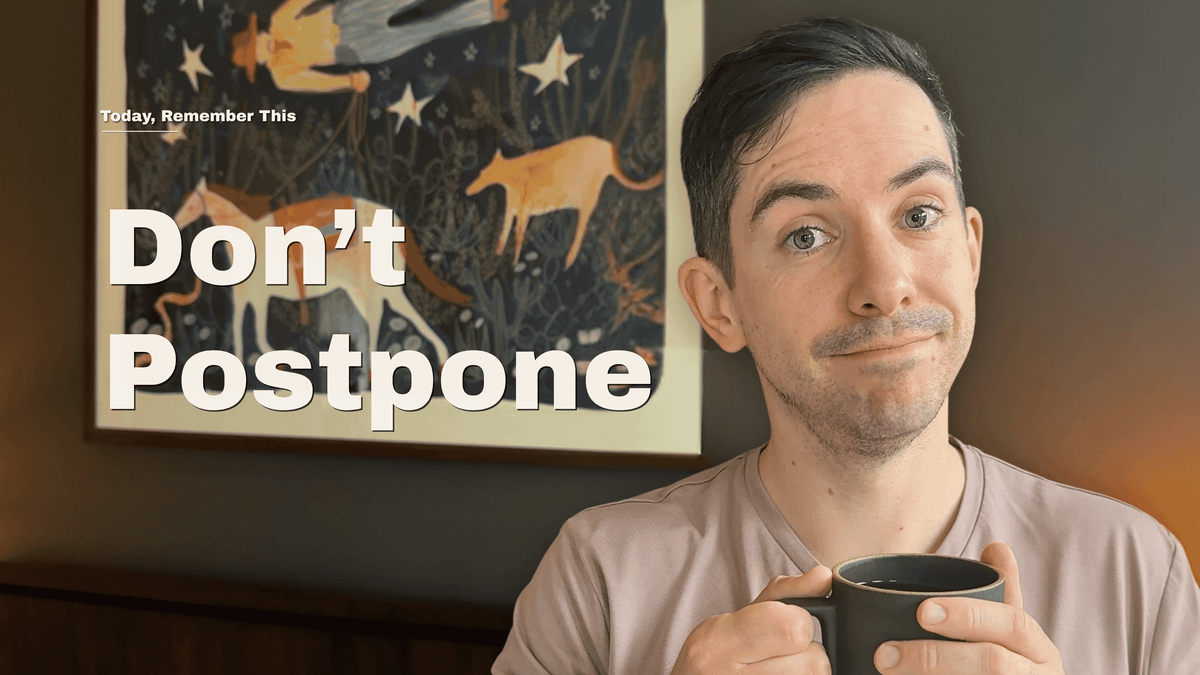
Today, remember this.
Don't spend tomorrow's security buying today's happiness. But don't spend today's life buying tomorrow's, either.
It's possible to plan, prepare, and invest so carefully for tomorrow that you accidentally stop living today.
Really, much of modern life comes down to one deceptively simple question:
How much of today should I trade for tomorrow?
Ever since I got my first "grown-up" job, I've been fascinated by the idea of the FIRE movement—short for Financial Independence, Retire Early. The basic idea is both simple and brutally demanding: spend far less than you earn, saving as much as you can, and invest the difference consistently over many years. Eventually, you reach the point where paid work becomes optional. Instead of relying on a salary, your investments generate enough income to support the life you want.
I understand why that idea is so compelling. I love having a clear, overarching goal to work towards with laser-beam focus, and few goals are as tangible as financial independence. The thought of becoming the master of my own time is also deeply attractive (and I suspect I'm not alone there).
But, the longer I've thought about FIRE, the more I've realised it reveals a tension that reaches far beyond money. It asks a question that we're all forced to reckon with eventually:
How much am I willing to sacrifice today for the promise of a better tomorrow?
This question has been on my mind a lot recently because my husband and I are genuinely trying to build towards a stable financial future. We save consistently. We invest. We think about the kind of work we'd still choose to do if we no longer had to earn a paycheck.
I find that incredibly motivating.
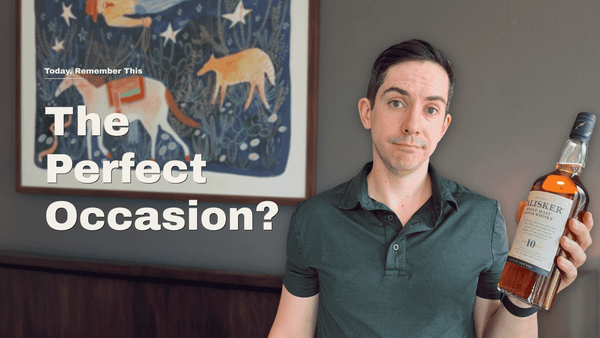
But every so often I notice myself drifting a little too far into the future. Maybe we shouldn't take that trip. Maybe we shouldn't buy the nicer bottle of wine. Maybe we'll enjoy those things more once we've "made it."
That's usually when I remember something that's slightly uncomfortable: none of us actually knows how much time we get. The promise of financial independence isn't a promise at all. It's a probability.
My dad died much younger than he probably ever expected he would. Like most people, he almost certainly assumed retirement would arrive eventually—that there would be decades to enjoy the life he'd worked so hard to build. Instead, that future never came.
That doesn't mean saving is pointless, of course. Quite the opposite. Preparing wisely for the future is one of the most responsible things we can do.
But preparing for the future and assuming the future is guaranteed are two very different things.
I've gradually stopped thinking about financial independence as an attempt to escape my current life or a fast-as-possible race towards retirement. Instead, I think of it as creating choices myself as I go.
Sometimes the right decision really is to save the money.
Sometimes it's to spend it on something that becomes a memory you'll carry for decades (like that nice bottle of wine...).
The difficult part is that, sadly, there's no spreadsheet formula to tell you which moments are worth paying for.
In the end, this isn't really a reflection about money.
It's about time and balance.
Tomorrow matters enormously. But so does today.
If we spend everything now, tomorrow becomes unnecessarily difficult. But if we postpone everything meaningful until some imagined future, we risk arriving there having forgotten how to enjoy the life we were working so hard to create.
I'm trying to become the sort of person who saves with optimism rather than fear. Someone who plans carefully for a long future while remembering that today is part of the future I once dreamed about.
A question to take with you
What's something you've been saving for "one day" that might deserve a small place in your life today?